← All recipes
Win the Holidays with Herb-Crusted Sous Vide Prime Rib (Rib Roast)
Steps
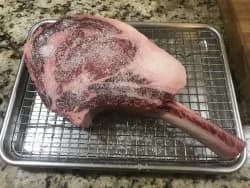
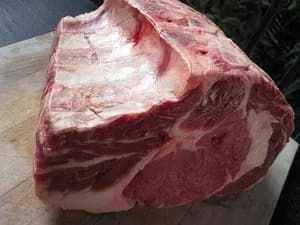
- A rib roast refers to cuts from the seven full ribs that line a steer’s back between the shoulder and the loin. These ribs are connected to a large eye of meat and a hunk of fat-marbled muscle commonly referred to as the cap or the deckle. Home cooks typically buy a two- to four-rib roast, as the whole shebang-of-seven is likely way too big for their ovens and can yield up to 30 pounds of beef. Even for hardcore carnivores, that’s hella meat, yo.
- How many ribs do I need per person?
- One rib yields about two servings. If your friends are thinking about swimsuit season, you may end up with leftovers. If you’re cooking a late-night, post-shift feast for a bunch of chefs, however, you may well need more. (Also, you should probably lock up the liquor cabinet.)
- So what exactly is a “standing rib roast”?
- You may have heard the term standing rib roast knocked about and wondered, “Hey, what could that mean?” This: Rib roasts can be cooked boneless—in which case the meat has been removed from the rack of rib bones to which it was attached—or along with that rack of rib bones. In the latter case, the meat is usually arranged on top of that rack of bones before it goes in the oven. As your roast cooks, the bone rack acts as a natural version of the metal rack that comes inside roasting pans. So the roast is standing on top of the bones. (If this doesn’t make sense, don’t worry; it will once you’ve worked through this technique.)
- And “prime rib”?
- Prime rib—a phrase that predates the USDA grading system—is used interchangeably with rib roast, but the USDA does not require that a rib roast come from USDA Prime–grade beef. Don’t worry about that—the next level down is Choice, and Choice cuts should prove adequately juicy and delicious.
- What else do I need to know?
- Well, if you’re interested in customizing your cut further, you can request ribs from the “chuck end” (also called the “blade end”), or the “loin end” (also known as the “first cut”). The blade end, comprised of the ribs located closer to the cow’s shoulder, is typically fattier, the stuff that Jack Sprat’s wife (and the ChefSteps staff) really gets into. The loin end—located closer to the loin—is leaner and more tender, but also comes with some tough connective tissue. We are partial to the chuck side.
- Okay, got buying tips?
- Yup. Before you shop, you need to decide whether you’re asking the butcher to prepare your roast for cooking or planning to do it yourself. Some butchers at specialty grocery stores like Whole Foods will french the rib bones, removing all fat, meat, and connective tissue from the bones to expose a pretty, polished row. A professional can also remove the bones and then tie them back on, a step that helps keep the meat moist and also makes it easy to carve after cooking.
- Do I have the right bags?
- When you are cooking heavy food, or when you’re cooking at a high temperature (above 158 °F / 70 °C), the seams of ziplock-style bags can fail and expose food to the water. Nobody wants that. For this roast, opt for heavy-duty sous vide bags. In a pinch, you can double-bag with two ziplock-style bags, but sous vide bags are definitely preferable.
- I’d like to see what the meat will look like when it is cooked before I select the temp I want. Thoughts?
- Oh, have you downloaded the Joule app from the Apple App Store or Google Play? Do that, then head to the Holiday Roasts collection. Inside the Herb-Crusted Rib Roast (Prime Rib) guide, you will find videos of all the donenesses. Cool, right?
- Okay, if I’m gonna do this, I’m gonna need a French dip.
- Right? Some of us spend the whole feast obsessing over the next day’s sandwich. Here is an au jus recipe if you need one.
- Depending on whether or not you are planning to butcher the roast, you might want to heat your sous vide tool now or wait a little bit—it should take only a few minutes to reach the target temperature.
- Anyway, now is a good time to select the doneness you want.
- Rare: 122 °F / 50 °C
- Medium-rare: 129 °F / 54 °C
- Medium: 136 °F / 58 °C
- Medium-well: 144 °F / 62 °C
- Well-done: 154 °F / 68 °C
- Frenching—removing fat, meat, and connective tissue from the rib-rack bones—is optional, but we really like prepping roasts this way. Beyond just making your dish look epic, frenching the rib bones—and then separating the roast from the rack and tying the two pieces back together—will help you achieve a way cleaner carving job.
- Of course, you can always ask your butcher to french your roast for you. So why do it at home? First, because it’s fun. You learn an awesome new skill you can replicate using pork, rabbit, a rack of lamb—whatever. And second, you can often achieve better results doing it yourself, especially once you’ve mastered the technique. Finally, friend, everyone will be crazy impressed when you casually mention that the frenching job was yours and yours alone. Does it require patience? Yes. The first time you do it, does it take awhile? It does, but you can still have great success right out of the gate. Just be sure to keep your meat cool as you work. Now get to it!
- Below, you’ll find our favorite method for removing the fat, meat, and connective tissue from your rib roast. If you’re not planning to french and truss this sucker yourself, skip ahead to Step 6.
- Lay your roast on a work surface with the rib rack facing down. On one side of the roast, locate the main muscle, which should have a c-shaped curve of fat hugging it. We want to keep this delicious fat intact, so position your knife just to the side of it and perpendicular to the roast.
- Cut into the side of the meat from top to bottom with a quick, steady motion. (Use a kitchen towel to steady the roast with your other hand.) You want to create a slit that’s about a quarter-inch deep. Repeat this process on the other side.
- Position your knife on top of the rack, then use it to draw a line down the length of the roast that connects the slits you created on the sides.
- Work your knife between the rib bones, using a back-and-forth motion along the line that you created along the top of the rib bones in the previous step. Rotate the roast and repeat.
- Flip the roast so that the fat cap is facing up. Just like you did on the other side, draw a line across the roast to connect the indents on each side. Cut along the line again, only this time allow your knife to go as deep as the rib bones. Work the knife between the bones using the same back-and-forth motion you used on the other side.
- Flip the roast again so that the fat cap is facing down. With your knife, remove the top layer of membrane on top of the rib bones. This will help you see things better as you work.
- With your knife, carefully peel away the connective tissue surrounding the bones. Push down on the meat surrounding the bones by applying pressure with your knife. Continue peeling and pushing away, wiping off your blade as needed, until there’s a gap between each rib bone and the tissue surrounding it.
- This is the hardest part, so be patient and stick with it. You’re almost done.
- Cut off the section of fat and meat underneath the rib rack, leaving enough material close to the bones that you can get a grip on it.
- Using two kitchen towels for grip, pull the remaining meat off the bones. Your ability to do this easily will depend on how well you separated the membrane from the bones in the last step. If you find that the meat is not coming off, go back to the previous step and try peeling the membrane back more thoroughly. Again, patience is key.
- Use a kitchen towel to remove any material that’s clinging to the bones. Get it all off—if you leave anything there, it will burn and blacken in the oven, sullying your perfect frenching job.
- Working as closely to the rib bones as possible, cut between the roast and the rack. This takes a little finessing, as you’ll be working around some hard bone. But keep going—you got this.
- With a knife, cut away connective tissue and cartilage from the roast. Cartilage is translucent and feels hard and plasticky. It’s important to remove these unwanted bits—they won’t soften during a shorter cook.
- Cut four to six pieces of butcher’s twine long enough to tie around the roast and rack.
- Lay roast flat on your work surface. Place rib rack atop roast, where it was before you trimmed it. Position twine at equal distances between each bone.
- Tie a string between each bone (or, if you have a particularly thick roast, on each side of each bone). We loop one end of the string three times around the other, then pull taut and tie a second knot to get a tight tie.
- Season your roast with salt and pepper, then heat a heavy pan over medium-high heat and add oil. When the pan is hot (like, hot hot), add the roast. Give it a good sear for about two minutes per side, but don’t bother searing the rib side. The goal is to build a good, dark crust.
- Remove the roast and set it aside. Then, add garlic and rosemary to the pan and toast them. When they are fragrant and toasty, scoop them onto the roast and allow the whole thing to cool for a few minutes.
- You can also presear your roast in the oven (475 °F / 250 °C for about 15 minutes) or skip this step completely. Choose your own adventure!
- Throw the whole roast and herby goodness into a sous vide bag. Be careful when transferring the roast to the bag—you don’t want those bones poking through.
- PRO TIP: You can wrap the bones with a paper towel to help prevent them from poking through your sous vide bag.
- Pop the bagged roast into the pot with Joule and allow it to cook 4–6 hours. Thinner roasts will take toward the shorter end and thicker roasts toward the longer end of the range, but don’t stress—you can leave the meat in the water for a couple extra hours, and it’ll come out just as tasty.
- An hour before you want to finish your meat, start working on your herbtastic rub.
- Pick herbs of your choice, chop finely, and set aside.
- CHEF’S TIP: You can use any fresh herbs you like, but the heartier ones will always work best and stand up to the meat and long cook time. We used rosemary and thyme here, but sage or marjoram would work too.
- Grind your peppercorns. Remember, the finer you grind your peppercorns the spicier your roast will taste. The smaller the grind, the more pepper that will stick to the meat.
- PSST: No grinder? You can crack the pepper with a cutting board and a pan. Place the peppercorns on the board and apply pressure with the bottom of the pan until they’re about the same size as in the right-hand photo.
- Combine dry ingredients in a bowl and set aside.
- With a whisk, beat egg whites to create a velvety foam. It’s important to create a uniform texture because it will make the eggs much easier to work with later on.
- Remove roast from the bag and transfer it to an oven-safe platter or baking tray.
- Don’t discard juices and other goodies from the bag; we’re gonna make a killer sauce with those things.
- Coat entire roast with egg white, avoiding the bone section.
- This steps helps the herb rub stick to the surface of the meat and develop a nice crust in the oven.
- Evenly sprinkle rub around the roast, coating as much of the meat’s surface as possible.
- Heat a pan over medium-high heat. When the pan is hot, pour in the juices, garlic, and rosemary from the bag, and reduce the mixture until almost no liquid remains.
- Once the garlic and herbs start browning, add beef stock and let it simmer until it’s saucy and thick. Strain the sauce and add extra herb rub or seasonings of your choice. Remove from the heat and set aside for serving.
- Heat the oven to 475 °F / 250 °C (with convection on if applicable). Roast the beef for about 5–15 minutes. Ovens vary, so just keep an eye on the meat and take it out when it looks good and delicious. If you have a thermocouple probe, stick it about a half-inch below the roast’s surface to monitor the temp.
- Separate the bones from the roast to carve. (Don’t discard that rib meat, though! It’s delicious!)
- Remove the butcher’s twine and any unwanted fat, then cut meat into thin slices. For presentation, place slices atop the rib rack to display your awesome frenching skills.
- Serve, and revel in your newfound meat-wizard status.
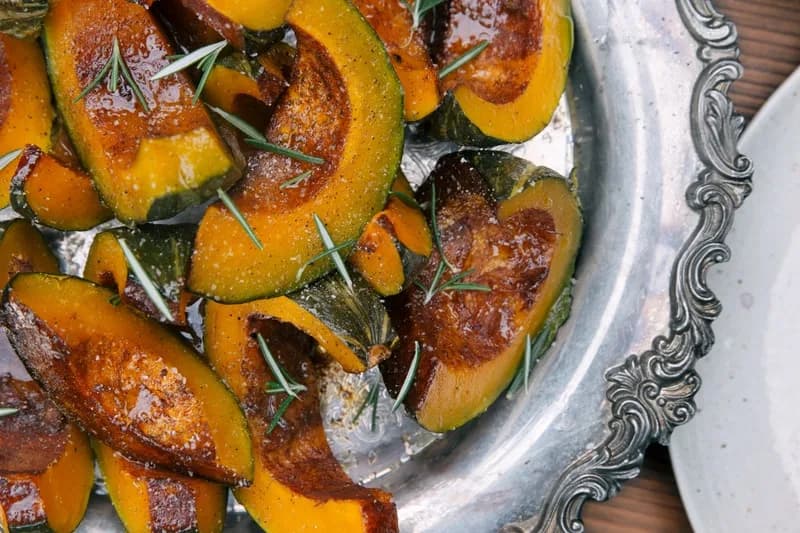
- Sweeten the deal with feast-worthy treats.
Originally published at Chefsteps.com. Reproduced for personal collection.