← All recipes
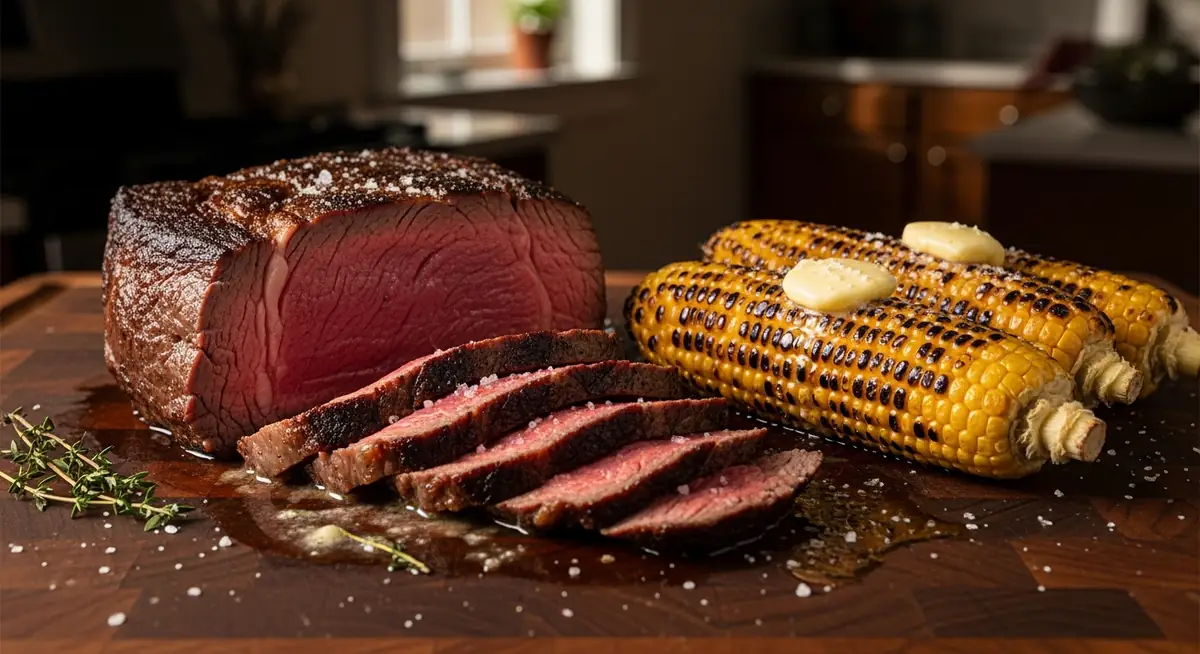
Reverse-Sear Ribeye and Charred Corn
Steps
- Dry brine, two days ahead. Pat the steaks dry and salt all sides heavily with kosher salt, about 1 teaspoon of Diamond Crystal per pound, until you can clearly see an even coat on every surface. Set them on a wire rack over a sheet pan and leave them uncovered in the fridge for about 48 hours. Do not skimp here. A thick steak needs the salt to reach the middle, and this is where under-seasoning happens. On cook day, add no more salt before searing. The finishing salt comes later, at the table.
- Start the steaks low and slow. Heat the oven to 225°F. Put the steaks, still on the rack over the sheet pan, right into the oven. No oil, no fresh salt, nothing else yet.
- Cook to temperature, not to time. A 2-inch ribeye takes roughly 60 to 75 minutes, but the time is only a guess. Start checking the center with an instant-read thermometer around the 45-minute mark. Pull the steaks the moment the thickest part of the center reads 115°F. If you prefer medium, pull at 125°F instead.
- Rest the steaks, crank the oven. Tent the steaks loosely with foil and let them sit while you finish everything else. Turn the oven up to 450°F. The rest here is a feature: it lets the surface dry out even more before it hits the pan.
- Butter and wrap the corn. While the oven comes up, rub each ear of corn with butter, salt, and pepper, and wrap each one tightly in foil. This can happen anytime, even while the steaks are still in the low oven, since the foil corn does not brown and is forgiving on timing.
- Steam the corn. Once the oven hits 450°F, put the foil-wrapped ears in for 12 to 15 minutes. They steam in their own butter and come out tender and sweet.
- Get the pan screaming hot. Set a carbon steel pan over your strongest burner and let it heat for 3 to 4 minutes until it is just beginning to smoke. Add a thin film of oil or tallow.
- Sear. Blot each steak dry with a paper towel, then lay them in the pan without crowding. Work in two batches if all three will not fit with space between them, because a packed pan steams instead of sears. Sear 60 to 75 seconds per side, pressing lightly for full contact.
- Render the fat cap. Use tongs to stand each steak up on its fatty edge for 20 to 30 seconds until it browns and crisps. On a ribeye this thick, that fat cap is the best bite in the house, so do not rush past it.
- Butter baste and pull. Drop the butter, smashed garlic, and thyme into the pan. Tilt it and spoon the foaming butter over the steaks for about 30 seconds. Check the temperature and pull the steaks at 130°F for medium-rare.
- Char the corn. Unwrap the ears and set them straight on the oven rack or a pan. Slide them under the broiler for 3 to 4 minutes, rolling once or twice, until you get blistered, blackened spots. This is your stand-in for the grill, so watch it closely. Broilers go from golden to gone fast.
- Rest, slice, and finish with flaky salt. Let the steaks rest 5 minutes, then slice against the grain. Let the slices sit for a few seconds so the surface is not steaming-wet, then sprinkle flaky sea salt generously across the freshly cut faces, more than feels natural. Applied this way the crystals perch on top and give little bursts of crunch and brightness. Skip this step, or scatter the flakes on the wet crust, and they dissolve and do nothing. Finish the corn with a fresh knob of butter, a pinch of flaky salt, and a squeeze of lime, and serve everything hot.
Notes
- Salt it like you mean itThe single biggest mistake on a steak this thick is under-salting the brine. There is a lot of interior to season, so be heavy-handed at the brine stage, then finish the sliced steak with flaky salt on the cut faces at the table. That two-part approach, seasoned through plus a bright salty crunch on top, is what keeps a rich ribeye from tasting flat and meaty.
- Pull low, land highA 2-inch steak carries a lot of thermal mass, so it keeps climbing after it leaves the oven, and the sear adds heat on top of that. Pulling at 115°F is what lets you land at a true medium-rare 130°F after searing. If you flip and baste for an extended sear, the stored heat can drive the center up 15 to 20 degrees during the rest, so on a thick cut, pull the steak from the pan around 120 to 122°F rather than waiting for a full 130 in the pan. Trust the thermometer over the clock, and untent the steak if it is still climbing past your target.
- No grill, still charredThe broiler does the grill's job on the corn. For the steaks, the deep crust comes from a truly dry surface and a truly hot pan, so blot the meat well and do not touch it once it goes down.
- Scale it downFor thinner steaks, keep the 225°F oven but start checking earlier and pull at the same 115°F target. The sear and rest do not change.