← All recipes
flameNoodlesAsian-InspiredWeekend project
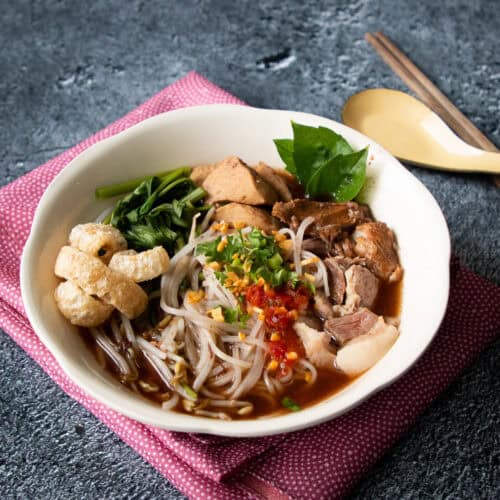
Authentic Thai Boat Noodles
Prep45 mins
Cook2 hrs 30 mins
Serves5 servings
Ingredients
Boat Noodle Broth
- 3.2 quarts water
- 2 lb pork bones, preferably neck bones (see note 1)
- 6 inches cinnamon stick
- 1 pc star anise
- 1 teaspoon coriander seeds
- 10 slices galangal
- 3 cilantro roots or 6 cilantro stems, crushed until bruised
- 3 inches daikon, peeled and cut into chunks
- ½ medium onion, cut into chunks
- 5 cloves garlic, smashed until broken
- ½ teaspoon white pepper, ground
- 1 pandan leaf (about 18 inches), optional
- 3 Tablespoons soy sauce
- 2 Tablespoons Golden Mountain Sauce
- 2 Tablespoons Tao jiew (Thai fermented soy bean paste), or sub miso or doenjang
- 2 Tablespoons white vinegar
- 1.5 Tablespoons black soy sauce, or dark soy sauce
- 1 Tablespoon fish sauce
- 25 g rock sugar , or 2 Tablespoons granulated sugar
Salt, as needed
- ⅓ cup liquid pork or beef blood, or more if you like it thicker (see note 2)
Marinated Pork
- 225 g pork shoulder, sliced into ⅛-inch thick pieces
- 1 tablespoon soy sauce
- ½ teaspoon sugar
Noodle Bowl
- 1 lb dried rice noodles, size small (1.5 mm)
- ½ lb Asian style meatballs, pork or beef (see note 3)
- 2 cups water spinach or spinach, cut in 2-inch pieces
- 2 cups bean sprouts
- 6 sprigs cilantro, chopped
- 1 stalk green onion, chopped
Optional Condiments for Serving
Chili vinegar, highly recommended (see note 4)
- 3 sprigs Thai basil , optional
Fried garlic & garlic oil, optional
Crispy pork rind, optional
Roasted chili flakes, to taste, optional
- 3.2 quarts water, 2 lb pork bones
- 6 inches cinnamon stick, 1 pc star anise,
- 1 teaspoon coriander seeds,
- 10 slices galangal,
- 3 cilantro roots or 6 cilantro stems
- 3 inches daikon, ½ medium onion,
- 5 cloves garlic, ½ teaspoon white pepper,
- 1 pandan leaf (about 18 inches)
- Add all the seasonings except the salt: soy sauce, Golden Mountain Sauce, tao jiew, vinegar, black soy sauce, fish sauce, and sugar; simmer gently for 1 hr 15 mins. If the bones become exposed, top it up with just enough water to keep everything submerged.
- 3 Tablespoons soy sauce,
- 2 Tablespoons Golden Mountain Sauce,
- 2 Tablespoons Tao jiew (Thai fermented soy bean paste),
- 2 Tablespoons white vinegar,
- 1.5 Tablespoons black soy sauce,
- 1 Tablespoon fish sauce, 25 g rock sugar
- 1 lb dried rice noodles
- 225 g pork shoulder,
- 1 tablespoon soy sauce, ½ teaspoon sugar
Salt
- ⅓ cup liquid pork or beef blood,
- ½ lb Asian style meatballs
- 2 cups water spinach or spinach,
- 2 cups bean sprouts
- 6 sprigs cilantro, 1 stalk green onion,
Chili vinegar, 3 sprigs Thai basil,
Fried garlic & garlic oil, Crispy pork rind,
Roasted chili flakes
Instructions
For the Broth:
- Add pork bones and water to a large stock pot making sure the bones are completely submerged. Simmer for 30 minutes.
- Meanwhile, crush the cinnamon sticks until broken in a mortar and pestle (or smash them with something heavy) and add to a dry skillet or pot. Add star anise and coriander seeds and toast over medium high heat, stirring or shaking constantly until the coriander seeds are slightly charred and start to pop. Remove from heat, then add the spices into a soup infusion bag or tie in a cheese cloth along with galangal and cilantro roots or stems.
- After 30 mins of simmering, skim the scum off the top of the broth, then add the spice bag, daikon, onion, garlic and white pepper. Fold the pandan leaf in half and tie into a knot (this bruises it and releases the aroma) and add it into the broth as well.
- While the broth is simmering, soak the noodles in room temp water for 25-30 mins for noodles size small (1.5 mm wide). Exact timing will depend on the brand and the temperature of your water, but you want the noodles to be completely pliable and no longer holding their original shape. Drain the noodles and set aside. (If using other kinds of noodles, see blog post above for instructions)
- Now is also time to make the marinated pork simply by combining the pork with the soy sauce and sugar and mix well.
- (If you’re making fried garlic and chili vinegar, now is also the time to make them as well.)
- When the broth is done, taste and adjust seasoning with more salt or sugar if needed. You want to season the broth strongly as it will be further diluted once we add noodles and veggies to it, so aim for it to be a tiny bit too salty right now. If it is much too salty, it means you have let it reduce too far, so add more water to dilute.
- Remove the spice bag and discard. Use a wire skimmer to remove the daikon, garlic and onion. If you want you can eat the daikon with the noodles or save it for another meal. The garlic and onions will mostly be dissolved by now but any pieces can be discarded, though they are also edible.
- Remove the pork bones from the broth, and use a fork or tongs to remove any meat off the bones and reserve this for the noodle bowl.
- Cook the marinated pork: Bring the broth to a simmer over high heat, then place the marinated pork in a wire skimmer (you may need to do a half batch if it doesn't fit) and dunk it into the broth, keeping the pork inside the skimmer; stir it around just until the pork is no longer pink (less than 1 minute), then drain and set aside in a bowl. (This is much more easily understood by watching the video)
- Add the blood: Bring the broth back to a simmer, and gradually add the blood WHILE STIRRING so the blood does not clump up. You'll notice the broth thicken up instantly - this is the boat noodle magic! Add the meatballs, then keep covered on the lowest heat until ready to serve. (The meatballs are already cooked, they just need to be heated.)
- Bring a large stock pot of water to a full boil over high heat, filling the pot as high as you can without risking spillage; this is for blanching noodles and vegetables. You want a lot of water to ensure that temperature doesn't drop too much after you add the first batch of noodles, and also to make sure the noodles can be submerged inside the noodle strainer or sieve.
- While you wait for the water, separate the noodles into portions and place them into their own serving bowls. Also get all the condiments and toppings ready for serving.
- When the blanching water is rapidly boiling, keep the heat on high and put 1 portion of noodles into a noodle strainer or a metal sieve along with a handful of bean sprouts and a handful of spinach. Dunk the noodle strainer into the water and shake it around for 5-10 seconds (if the pot of water is on the smaller side, keep it in for 10 seconds). Shake off excess water and place the noodles and veg into a serving bowl.
- Check the noodle texture, it should still be chewy but should not feel undercooked. If they still taste undercooked, put it back in for another 5 seconds and increase timing for the next batch. Repeat with the remaining portions.
- (Note: I recommend blanching 1 portion at a time as it is much harder to separate noodles into portions after they're cooked.)
- Stir the broth (as the blood will settle) and ladle the broth over the noodles along with a few meatballs. Top the noodles with the marinated pork, the meat from the bones, fried garlic, garlic oil, chopped cilantro and/or green onions, and Thai basil (if using).
- Serve immediately with roasted chili flakes, chili vinegar, and crispy pork rind. Enjoy!
Notes
I prefer pork neck bones because they have a lot of meat on them, which makes a great addition to the noodle bowl. If you’re using beef bones, you will not have much of this meat.
Beef or pork blood can be found frozen at many Asian grocery stores. Do not get cooked blood which is solid and can’t be used for this recipe. If you cannot find blood, substitute coconut milk.
Asian style meatballs can be found refrigerated or frozen at most Asian markets. If large, half or quarter them.
Originally published at hot-thai-kitchen.com. Reproduced for personal collection.