The best thing I ate this week cost about forty cents.
One slice of Trader Joe's white bread into the Breville, and then the move: hit "A Bit More" twice. Not once. Twice. Pull it, and then leave it alone for a minute before anything touches it. Then a cold slab of the Costco grass-fed butter, thick enough that it doesn't vanish on contact. That is the entire recipe. I stood at the counter and had a small religious experience.
The two presses matter because that bread is soft and a little sweet, which means a single standard cycle browns the surface before the inside has given up its moisture. You get color without crunch. The extra passes finish the crumb.
The cooling matters more, and it is the step almost everyone skips. Straight out of the slot the bread is still venting steam. Butter it right then and the butter melts down into a wet layer and the whole slice goes soft underneath. Give it 60 to 90 seconds propped on its edge, not lying flat on a plate where the steam gets trapped against the bottom, and the surface sets. Now the butter sits half-melted on top instead of soaking through, and you get the crack.
Butter is the smallest version of the argument.
Toasting bread does two things at once, and only one of them gets talked about. The obvious one is flavor: heat drives the Maillard reaction, sugars and amino acids go to work on each other, and you get nutty and toasty where there used to be soft and mild. The one nobody mentions is that toasting turns bread into structure. It goes from something that collapses under a wet ingredient to something that holds. A raw slice under a poached egg is a napkin. A toasted slice under the same egg is a plate.
Once you notice that, you start seeing how far people push it.
eggs, mostly
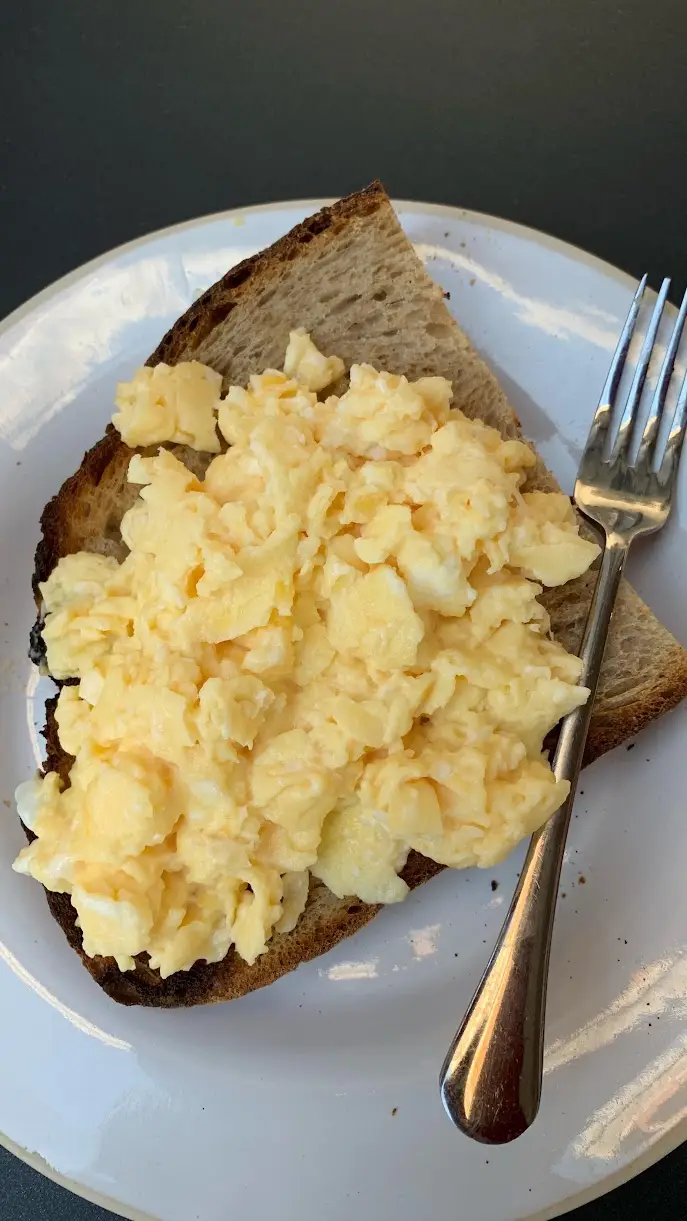
The purest case is eggs on toast, and the best version I have had recently came out of GAIL's on High Street Kensington. Soft scrambled, barely set, spooned in loose folds over a thick slab of dark-toasted sourdough. Not a scramble chased around a pan until it squeaks. Something closer to a sauce with structure.
Look at where that toast is charred at the edges. That is not an accident and it is not a mistake. It is the only reason the bread survives contact with eggs that wet.
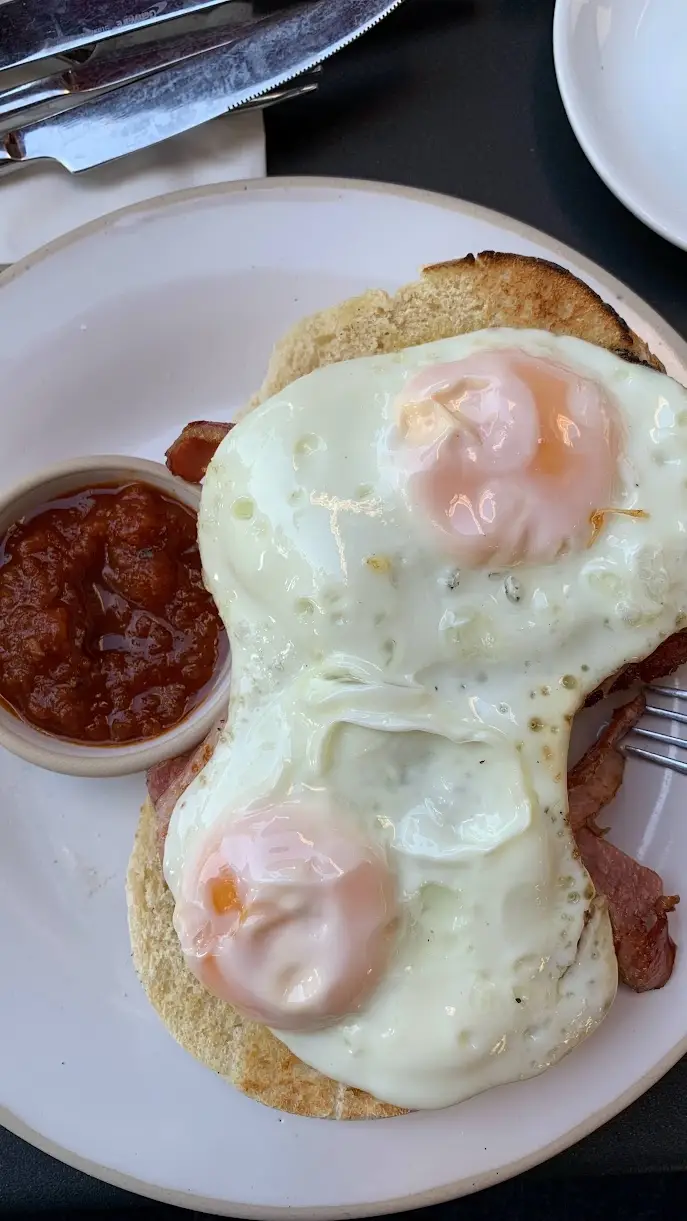
Same place, different morning, harder version of the same problem: two eggs sunny side up over bacon, whites just set, yolks still liquid, with a ramekin of tomato chutney on the side. Two yolks and a pile of bacon fat is a genuine structural load. The bread underneath takes all of it and stays a sandwich.
putney
We lived in Putney for two years while I was at Microsoft, and that is where this started.
There was a guy in the work cafeteria named Darren who made scrambled eggs the way they are supposed to be made, soft and barely set, over good toasted bread. Thanks, Darren. You have no idea what you did to me.
There was Carluccio's along the river, where the bread was so good it made the rest of the table quiet, and the soft scrambled eggs alongside it were as good as anything I have paid three times as much for since.
There was Fernandez and Wells, and their baguette sandwiches, barely toasted, thinly sliced chorizo and manchego and not much else. Just typing that made my mouth water. That is a sandwich built entirely on the confidence that the bread is good enough to be most of the sandwich.
And there were the bacon baps at the East Putney tube stop, which are the exception that proves the rule. No toasting at all. A soft roll, butter, and the most perfect bacon imaginable, handed over in paper on a grey morning. Some mornings the bread's job is to be soft and get out of the way. The British understand bacon on bread at a national level and I do not think we have caught up.
Two years of that will rewire you.
at home
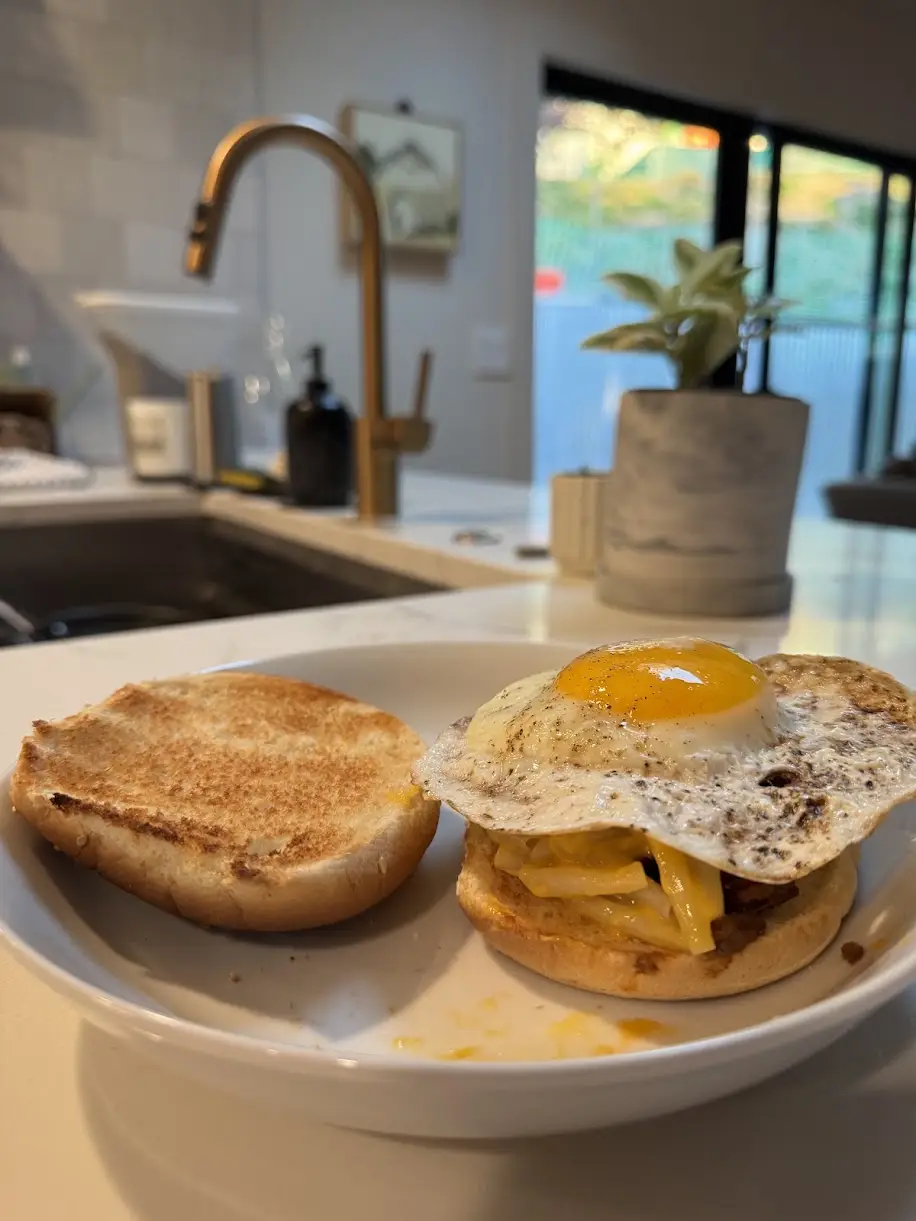
The English muffin is the best-engineered bread in this entire post and it gets no respect. Fork-split, never knife-cut, so you get the craggy nooks and those sharp little toasted ridges. Then it takes cheese, bacon, and a fried egg with lacy crisp edges and does not buckle.
Those same nooks are why orange marmalade belongs on a toasted muffin and nowhere else. The marmalade pools in the low spots, the bitter peel hits against the butter underneath, and every bite has both.
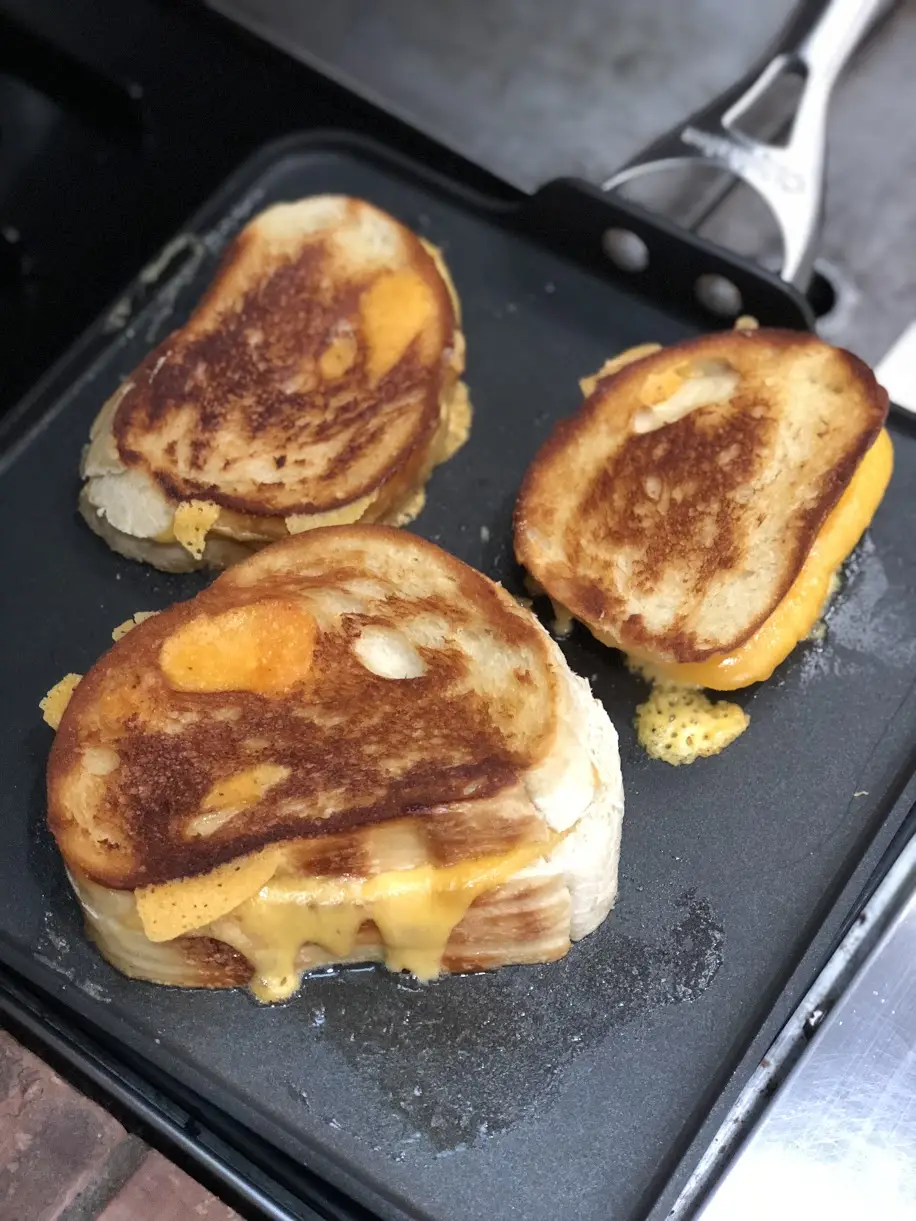
Grilled cheese is the same idea turned inside out. The bread is not holding something on top, it is holding something molten in the middle, and the toasting happens in butter on the griddle instead of in a slot. Let the cheese run out the sides and hit the hot surface. That frizzled orange lace welded to the griddle is the best part of the sandwich and it is free.
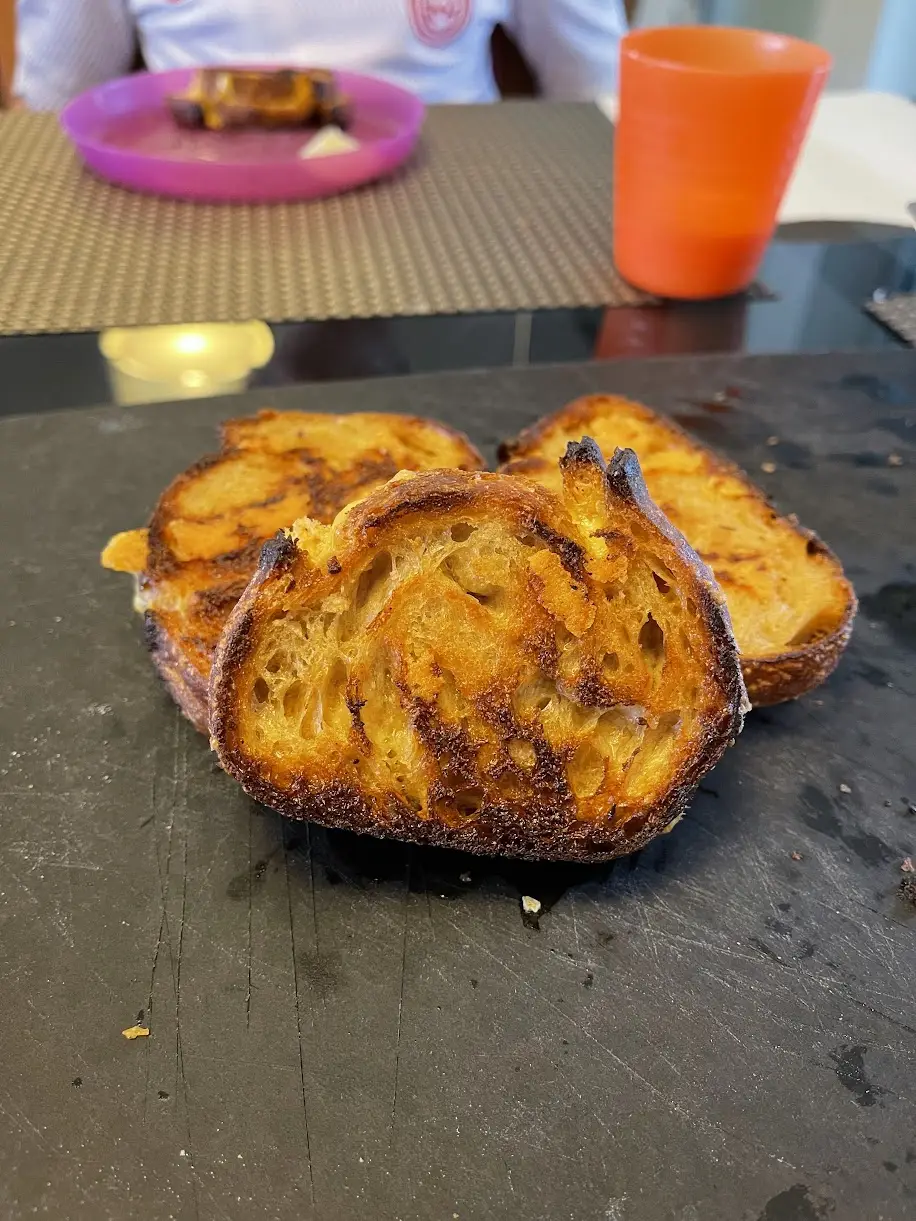
The other one I do constantly: split a baguette lengthwise and lay it cut-side down on a sheet pan where bacon just finished cooling. The drippings are still warm, the bread drinks them, and you get a crisp golden face that tastes like the best part of breakfast. Nothing else in my kitchen gives back that much for that little work. It is the same logic behind the bagel and bacon situation I fed three teenagers off one sheet pan, where the bread was doing most of the quiet work there too.
how far it goes
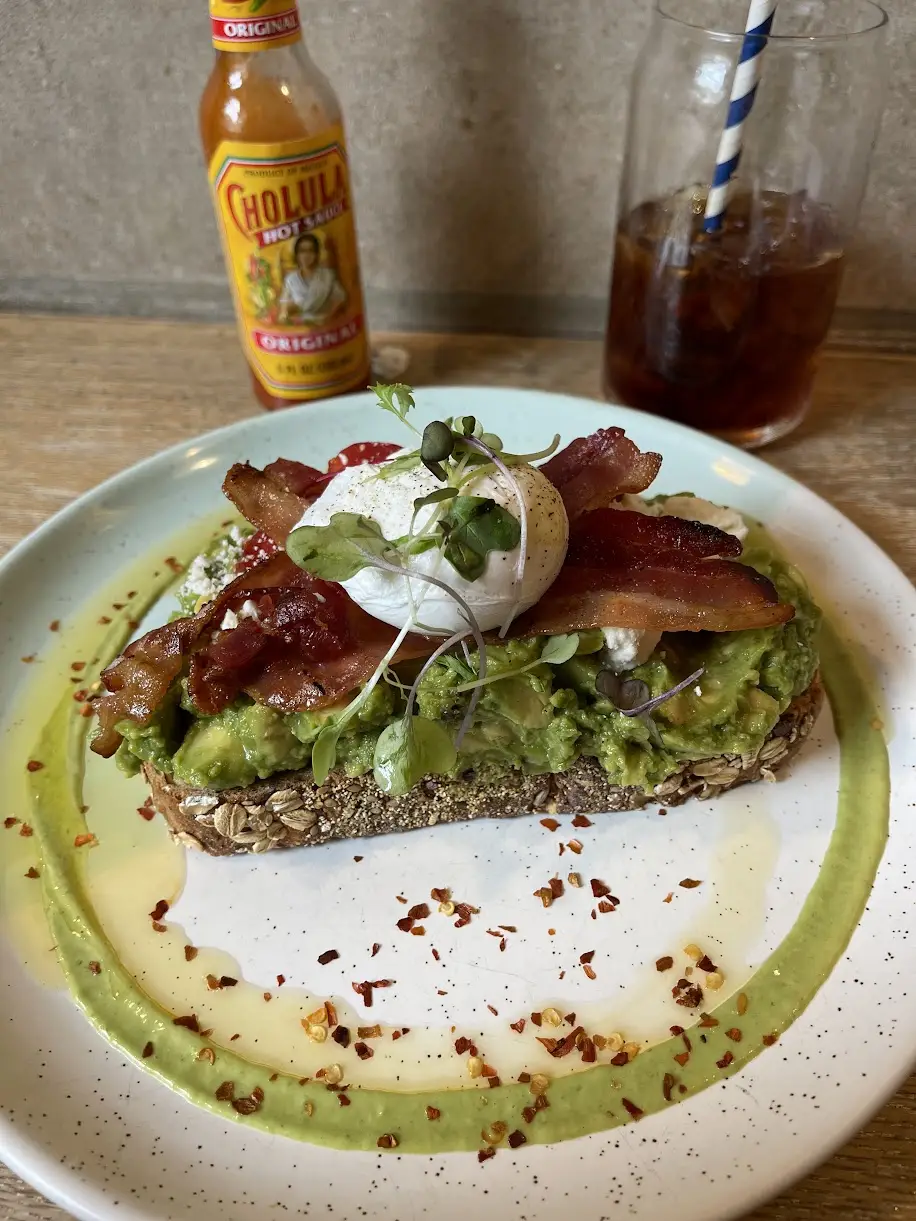
Bluestone Lane on the Upper East Side put a poached egg, bacon, smashed avocado, feta, chili flakes and a swirl of green herb oil on a single slice of seeded multigrain. Five wet or heavy things on one piece of bread. It held.
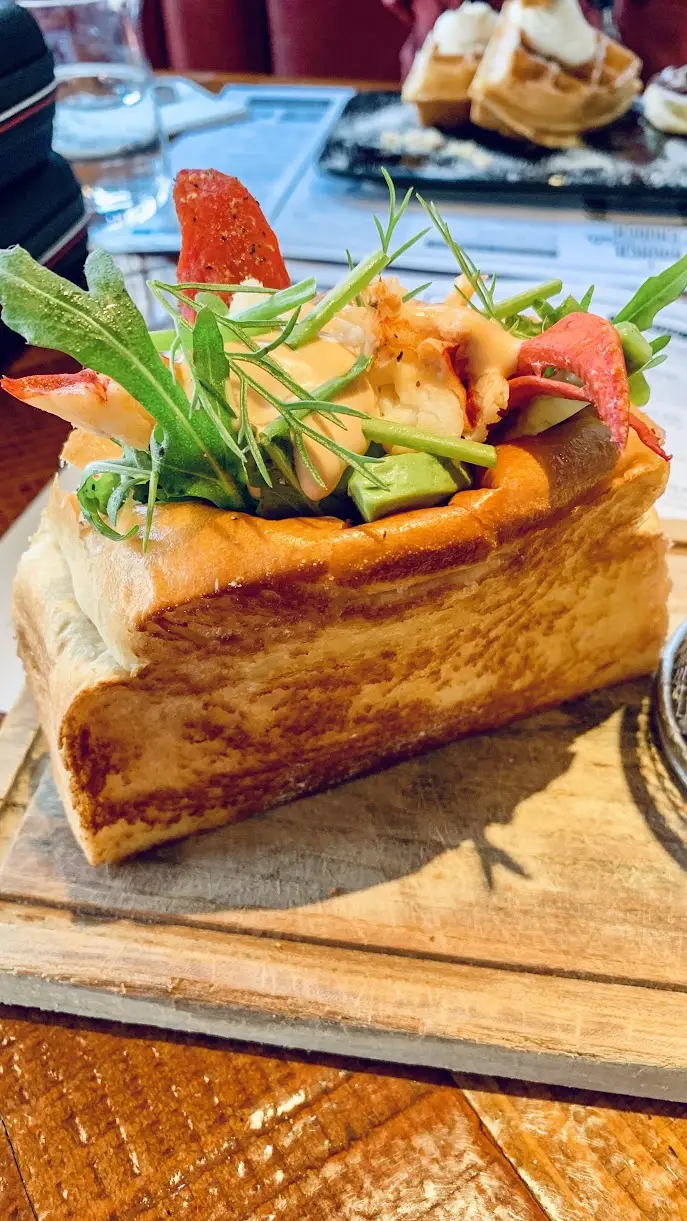
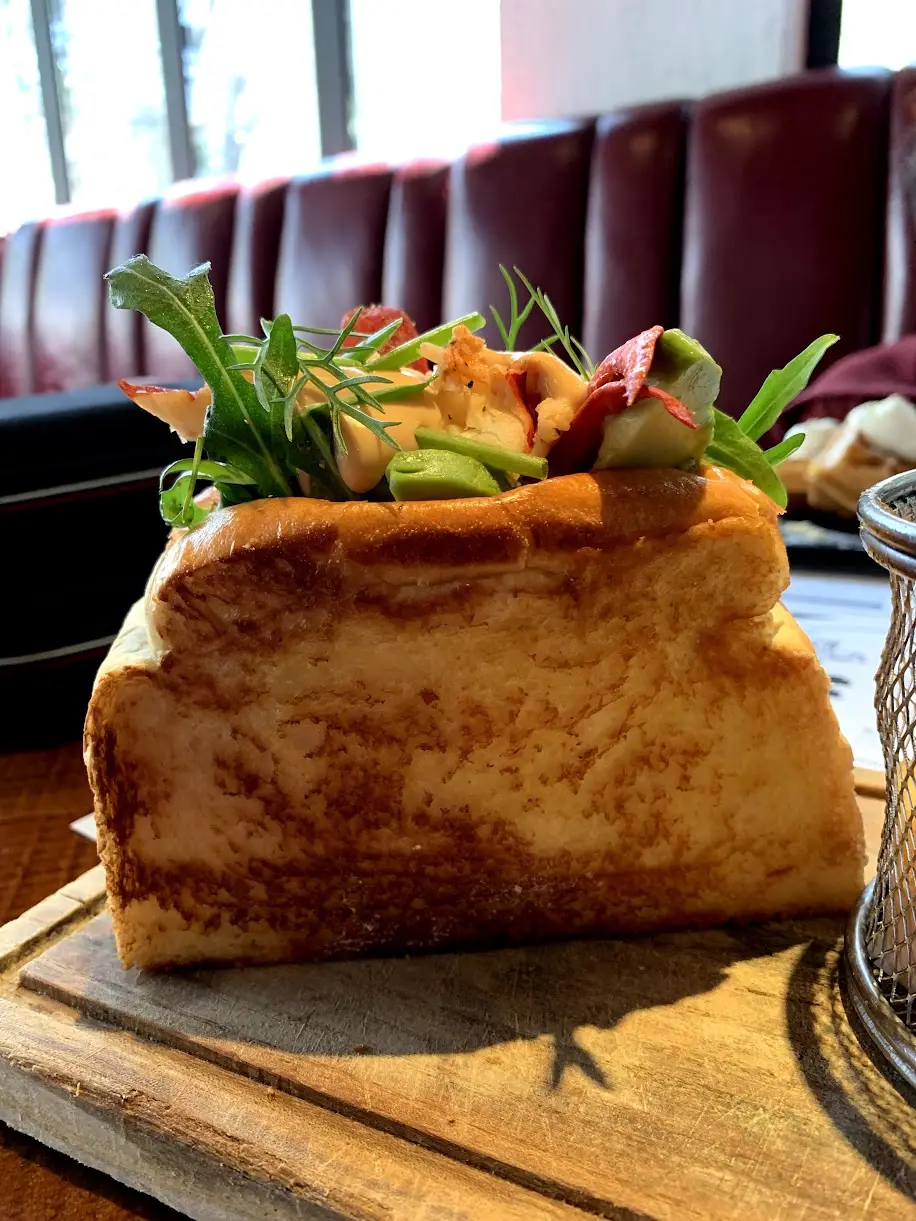
And then there is Bull & Claw in Shanghai, which took the idea past sandwich entirely. They hollowed out a thick block of milk bread, toasted the walls, and served lobster, avocado and arugula sitting inside it. The bread is not underneath the food. The bread is the bowl.
Look at the cut face on that thing. Toasted right to the edge, golden and firm enough to stand up on its own and take the weight of a lobster. That is bread doing structural engineering.
the real reason
There is a straight line from the forty-cent slice to the lobster box, and it runs through the same physics both times. Heat, sugar, a dry surface, and a crumb that has given up enough moisture to hold its shape.
Toast holds up because it is honest. There is nowhere for a bad ingredient to hide. Mediocre bread makes mediocre toast, and great bread with a little heat and a little fat becomes something close to perfect for about ninety seconds. Everything is on the surface, literally.
It also costs almost nothing and takes almost no time, which means the barrier between wanting it and having it is basically zero. Very few genuinely great things work that way.
So the real question is not what you put on toast. It is how far you would push it. What is the heaviest, wettest, most structurally unreasonable thing you have ever successfully put on a piece of toasted bread? I want the ones that shouldn't have worked.